

Home > On-Demand Archives > Workshops >
Polyphase Wide-Bandwidth Filters Implemented with Order of Magnitude Workload Reduction: Capabilities and Implementation
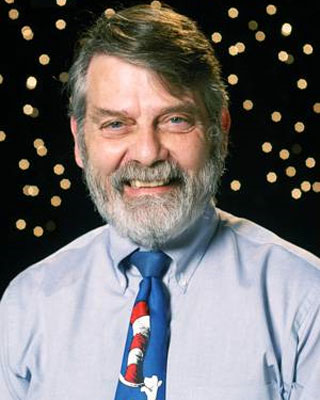
fred harris - Watch Now - DSP Online Conference 2022 - Duration: 02:58:50
We examined Polyphase Analysis and Synthesis filter banks in an earlier workshop. The two filter banks are duals and can operate independently of each other. In this workshop, we use both banks in a tightly coupled manner to synthesize broadband filters with an order of magnitude workload reduction. For this design process, the filter bandwidths are a large fraction of the sample rate. Since the target filter specification has a wide bandwidth, it would seem that the signal processing that we conduct here can’t be the same as that used in the analysis filter banks. That is we can’t reduce the sample rate to the reduced bandwidth of the signal and operate the script at the reduced clock rate as we did in channelizer designs. In fact, we can do that! We can form a filter with a wide bandwidth from a set of narrow bandwidth fragments of the wide bandwidth system by using the perfect reconstruction properties of the analysis channelizer’s Nyquist segments. The synthesis channelizer seamlessly reassembles the desired wide BW filter from multiple contiguous narrow BW fragments formed by the analysis channelizer. The process trivially accommodates sample rate changes if there is a BW reduction in the assembled band as well as frequency offsets and Hilbert transforms. The remarkable attribute of this process is the order of magnitude reduction in computational workload of the composite processing chain relative to the direct implementation of the same process.
We will build the MATLAB processing chain of the Analysis and Synthesis filter banks and then demonstrate variations of how they interact to simulate variable BW, variable sample rate, and variable frequency shift operations
can you also provide the 'myfrf' function? Thanks!
The myfrf file can be found as part of the first presentation on the left hand side under "Files Provided by the Speaker(s)"
stephane will have it in a minute!
11:50:02	 From  Ryan : On slide 28, is 20kHz supposed to be 20 MHz?
12:16:35	 From  Kenneth Houston : Also a very slow-rate chirp is a useful test signal
12:17:12	 From  mnapier : If you can share it I would like to see the paper on how to debug a polyphase filter.
12:42:42	 From  Michael Kirkhart : Is this the book that you mentioned? https://www.amazon.com/DFT-FFT-Convolution-Algorithms-Implementation/dp/0471819328
12:48:19	 From  Kenneth Houston : Suppose we implement the 600-tap filter version using fast convolution.  How would the computation compare to the analysis-synthesis version?
13:00:09	 From  Francisco Denk : Can you provide any insight about how the degradation introduced by the numerical precision used on the different stages (filter coefs, filter ouptuts, IFFT outputs, etc.) translates to the end-to-end performance of the channelizer? It is not intuitive to me since, apart from the typical effects, it also seems to have influence over how "good" the cancelation of the aliases is at the sum that is performed at the output of the filters
13:02:19	 From  Michael Kirkhart : I believe this is the paper you were referring to: "Teaching Programming and Debugging Techniques for Multirate Signal Processing"
13:03:18	 From  Mike Kloos : Can you share your scripts when this lecture replay is available?
13:03:52	 From  Michael Kirkhart : If so, it can be accessed at the following (need IEEE Xplore access): https://ieeexplore.ieee.org/document/8631695
13:03:57	 From  Curie Chung : On slide 9 (I think), can you pls explain the number 22?
13:13:51	 From  Radu Pralea : slide 54: when translating one block of IFFT (not centered around DC) out to a smaller FFT (let's say centered), doesn't a linear phase ramp (rotation) occur between the input and the output, proportional to the difference in "central frequency" of the block on the IFFT and FFT, that has to be accounted for (compensated)?
13:28:32	 From  John Kotrosa : Screen not matching his description ?
13:29:04	 From  Francisco Denk : is ok on my side
13:50:50	 From  Mike Mitchell : http://www.radiosoft.rs/how-to-pack-a-room-of-analog-fm-modulators-into-xilinx-fpga.pdf
13:59:26	 From  Radu Pralea : fabulous talk!
13:59:40	 From  Michael Kirkhart : Yes - trying to drink for a fire hose!
14:00:29	 From  Michael Kirkhart : Another awesome talk!  Thank you very much!
14:00:31	 From  Kenneth Houston : Thanks!
14:00:33	 From  Lubberhuizen : great talk, thanks!
14:00:33	 From  Sam Liimatainen : Thank you for another great talk!
14:00:37	 From  Tim : Thank you!
14:00:42	 From  Mike Kloos : Great talk!  Thanks you!
14:00:48	 From  Michał Knioła : Terrific as always, thank you!
14:01:14	 From  JohnP : Amazing ! Clicking.
14:01:39	 From  mnapier : Your talk from last year led be to a two path IIR half-band decimator.  Again, thank you much!
14:02:36	 From  Michael Kirkhart : LOL!
14:02:39	 From  Sam Liimatainen : 😂
14:02:51	 From  Jeff Cannon : Thank you, fred!  Great stuff.
14:02:55	 From  Francisco Denk : Thank you!!



Will the slides from this workshop be available?